Key Differences Between AM and PM
| Feature | AM | PM |
|---|---|---|
| Meaning | Ante Meridiem – before noon | Post Meridiem – after noon |
| Time Range | 12:00 midnight to 11:59 AM | 12:00 noon to 11:59 PM |
| Associated Part of Day | Morning | Afternoon and evening |
| Examples | 7:00 AM – early morning | 7:00 PM – evening |
| Usage Tip | Use AM for times before noon | Use PM for times after noon |
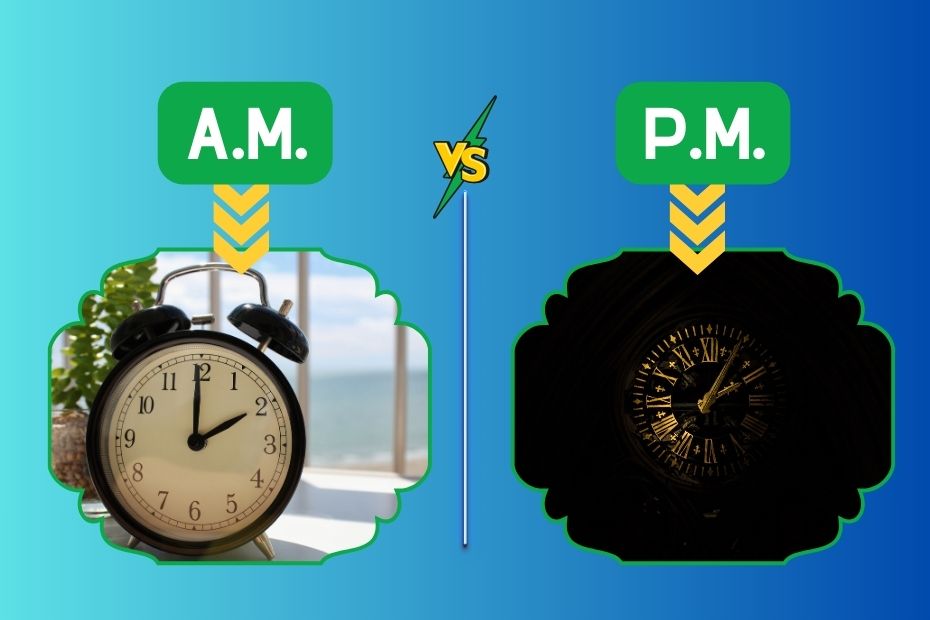
Conclusion: Remember, AM is before noon, and PM is after noon. This simple distinction helps in scheduling and avoiding confusion when using the 12-hour clock.
AM (Ante Meridiem)
- Latin for “before midday”
- Refers to the time from midnight to noon
- 12:00 AM is midnight
- Times from 12:00 AM to 11:59 AM
- Associated with morning hours
- Example: 9:00 AM is 9 in the morning
PM (Post Meridiem)
- Latin for “after midday”
- Refers to the time from noon to midnight
- 12:00 PM is noon
- Times from 12:00 PM to 11:59 PM
- Associated with afternoon and evening hours
- Example: 3:00 PM is 3 in the afternoon
Common Examples
12:00 AM
Midnight (start of the day)
6:00 AM
Early morning
12:00 PM
Noon (midday)
3:00 PM
Afternoon
6:00 PM
Evening
11:59 PM
One minute before midnight
Historical Background
The 12-hour clock system dates back to ancient Egypt and Mesopotamia. These civilizations used sundials during the day and water clocks at night, dividing both periods into 12 hours each.
The terms “AM” and “PM” come from Latin:
- AM = Ante Meridiem (before midday)
- PM = Post Meridiem (after midday)
This system became widely used with the invention of mechanical clocks in Europe during the 14th century and remains popular in many English-speaking countries today.
12-Hour to 24-Hour Conversion
Many countries use the 24-hour clock system (military time). Here’s how to convert between the two:
12:00 AM
00:00
6:00 AM
06:00
12:00 PM
12:00
3:00 PM
15:00
6:00 PM
18:00
11:59 PM
23:59
Quick tip: For PM times, add 12 to the hour (except for 12 PM which remains 12).