Understanding the key differences between these two important financial terms
| Feature | Interest Rate | APR (Annual Percentage Rate) |
|---|---|---|
| Definition | Cost of borrowing the principal loan amount | Total cost of borrowing including fees and other charges |
| What it includes | Just the interest charged on the loan | Interest + fees + other loan costs |
| Purpose | Shows the basic cost of borrowing | Shows the true cost of borrowing |
| Typical range | Usually lower than APR | Usually higher than interest rate |
| Usefulness | Calculating monthly payments | Comparing loan offers from different lenders |
| Regulation | Less standardized disclosure | Required by law to be disclosed (Truth in Lending Act) |
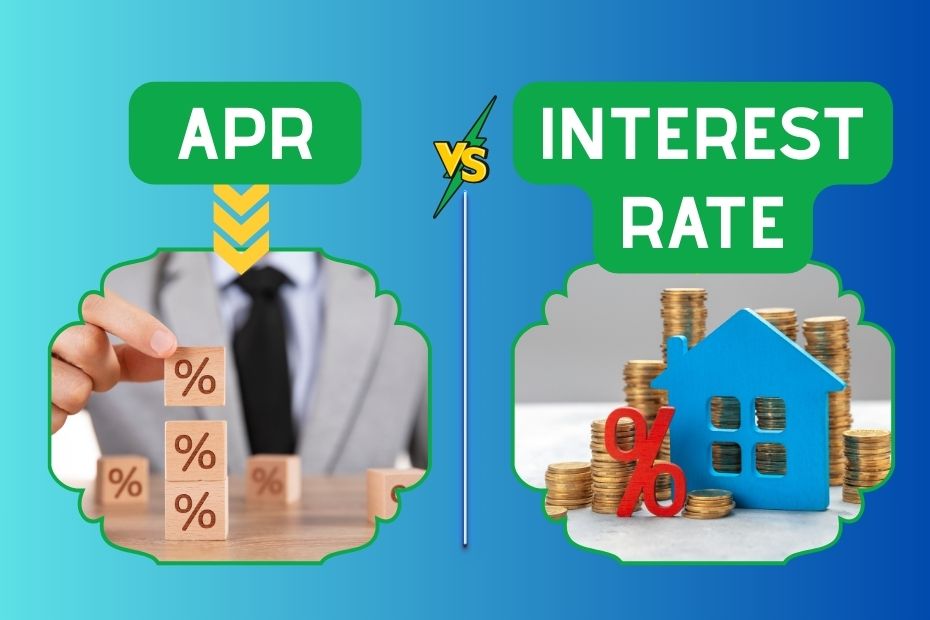
What is an Interest Rate?
The interest rate is the cost you pay each year to borrow money, expressed as a percentage. It does not include any fees or other charges associated with the loan.
Key characteristics of interest rate:
- Represents the basic cost of borrowing
- Used to calculate your monthly payments
- Does not include additional fees or charges
- Typically lower than the APR
Key Takeaway: The interest rate tells you what you’ll pay to borrow the money, but not the total cost of the loan.
What is APR (Annual Percentage Rate)?
The APR represents the total cost of borrowing, expressed as a yearly percentage. It includes the interest rate plus any additional fees or costs associated with the loan.
Key characteristics of APR:
- Includes both interest and additional fees
- Gives a more complete picture of loan costs
- Required by law to be disclosed to borrowers
- Better for comparing different loan offers
- Typically higher than the interest rate
Key Takeaway: The APR tells you the true cost of borrowing and is the best number to use when comparing loan offers.
Example: Mortgage Loan
Loan Details:
Loan amount: $300,000
Interest rate: 4.5%
Additional fees: $5,000 (origination fees, points, etc.)
Calculation:
Interest rate: 4.5% – This is the rate used to calculate your monthly payment.
APR: Approximately 4.65% – This includes both the 4.5% interest and the $5,000 in fees spread over the life of the loan.
When to Focus on Each
When the interest rate matters most:
- When calculating your monthly budget and payments
- If you plan to pay off the loan early (some fees may be less impactful)
- When comparing loans with similar fee structures
When the APR matters most:
- When comparing loan offers from different lenders
- When you want to understand the total cost of borrowing
- When evaluating loans with different fee structures
- When you plan to keep the loan for its full term
Why the Difference Matters
Understanding the difference between interest rate and APR can save you money when borrowing. Some lenders may advertise a low interest rate to attract customers but charge high fees, resulting in a higher APR. By comparing APRs, you can make a more informed decision about which loan truly offers the best value.
Remember: Always compare APRs when shopping for loans, not just interest rates. The APR gives you a more complete picture of the total cost of borrowing.