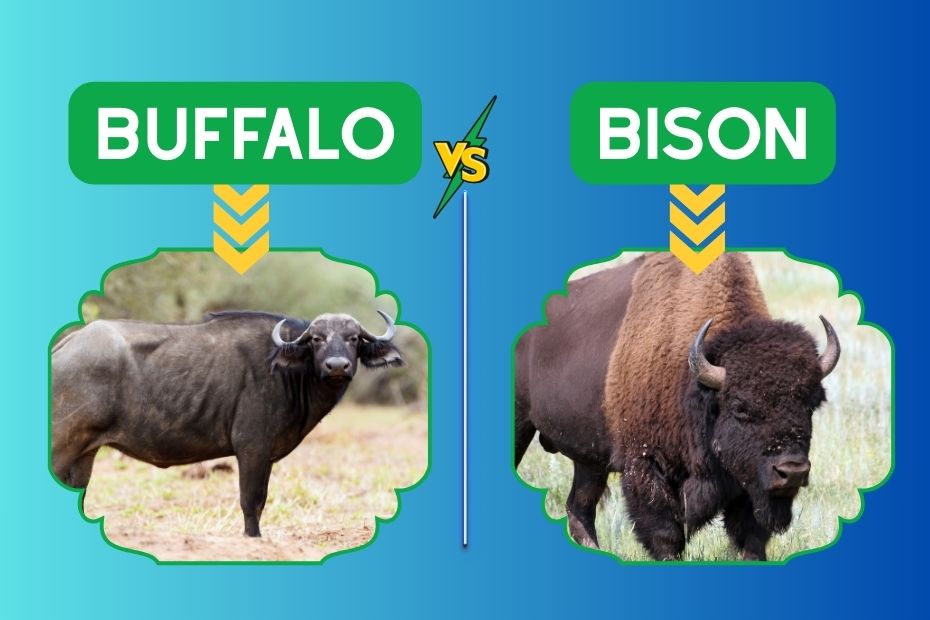
Many people confuse buffalo and bison because both are large, hoofed mammals. However, they have distinct differences in appearance, habitat, and behavior.
Key Differences Between Buffalo and Bison
| Feature | Buffalo | Bison |
|---|---|---|
| Scientific Name | Syncerus caffer (African), Bubalus bubalis (Asian) | Bison bison (American), Bison bonasus (European) |
| Hump | No prominent hump | Large shoulder hump |
| Fur | Short and sparse | Thick, shaggy coat especially in winter |
| Horns | Large, curved outward and upward | Short, sharp, and slightly curved |
| Habitat | Africa and Asia, often near water | North America and Europe, grasslands and plains |
| Size | Generally lighter and less bulky than bison | Heavier and more muscular with larger shoulder mass |
| Behavior | Often more social, live in large herds | Can be more solitary or in smaller groups, can be aggressive if threatened |
Buffalo
Buffalo typically refers to two species: the African buffalo and the Asian water buffalo. They have large, curved horns and are generally found in Africa and Asia.
Bison
Bison are native to North America and Europe. They have a large hump over their shoulders, a thick fur coat, and shorter, sharper horns compared to buffalo.
Conclusion: While both buffalo and bison are large grazing animals, their appearance, habitat, and behavior clearly distinguish them. Recognizing these differences helps avoid confusion between these iconic species.