Side-by-Side Comparison
| Characteristic | Indica | Sativa |
|---|---|---|
| Plant Height | Short and bushy (3-6 feet) | Tall and thin (up to 20 feet) |
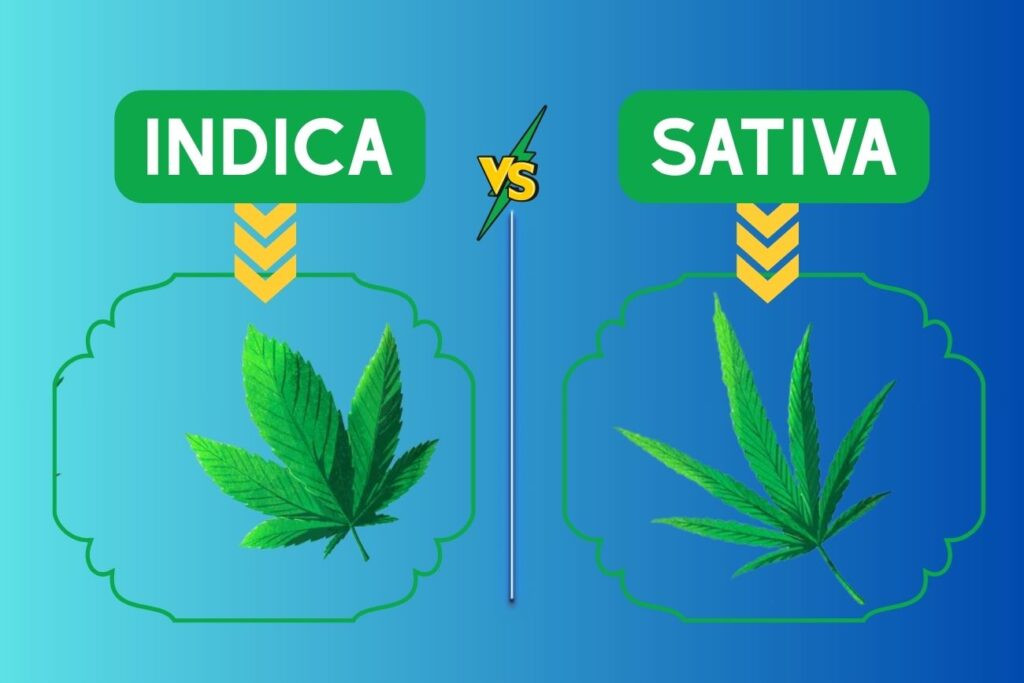
| Leaf Shape | Broad, wide leaves | Thin, narrow leaves |
| Flowering Time | 8-12 weeks | 10-16 weeks |
| Climate Adaptation | Cooler, harsh climates | Warm, sunny climates |
| THC Content | Generally lower | Generally higher |
| CBD Content | Generally higher | Generally lower |
| Typical Effects | Body high, relaxation | Head high, energizing |
| Best Time of Use | Evening/Night | Daytime |
| Medical Uses | Pain, insomnia, muscle spasms | Depression, fatigue, ADHD |
| Aroma | Earthy, skunky | Sweet, fruity |
Meet the Strains
Indica
Indica plants are known for their relaxing and sedative effects. They typically originate from the Hindu Kush region near Afghanistan and are adapted to harsh, dry, and turbulent climates.
Physical Characteristics
- Short, bushy plants
- Broad, dark green leaves
- Dense, heavy buds
- Shorter flowering cycle
- Higher CBD content
Typical Effects
- Relaxing and sedating
- Body-centered effects
- Pain relief
- Muscle relaxation
- Sleep aid
Sativa
Sativa plants are known for their energizing and cerebral effects. They typically originate from equatorial regions like Thailand, Colombia, and Mexico and are adapted to warm climates with long seasons.
Physical Characteristics
- Tall, thin plants
- Narrow, light green leaves
- Airy, elongated buds
- Longer flowering cycle
- Higher THC content
Typical Effects
- Energizing and uplifting
- Cerebral, head-focused effects
- Creativity boost
- Mood elevation
- Focus enhancement
Did You Know?
Most modern cannabis strains are actually hybrids that combine both Indica and Sativa genetics. The effects of a particular strain depend on its unique chemical profile (cannabinoids and terpenes) rather than simply being classified as Indica or Sativa.
Important Disclaimer
This information is for educational purposes only. Cannabis laws vary by location, and you should always comply with local regulations. Consult with a healthcare professional before using cannabis for medical purposes.
Key Takeaways
While the Indica/Sativa classification is useful for general guidance, the effects of cannabis are more complex than this binary distinction. The cannabinoid and terpene profile of a specific strain is a better predictor of its effects.
When to choose Indica:
- Evening relaxation and unwinding
- Pain relief and muscle relaxation
- Sleep assistance
- Stress and anxiety reduction
When to choose Sativa:
- Daytime energy and focus
- Creative pursuits
- Social situations
- Mood elevation
Remember that individual experiences may vary, and many modern strains are hybrids that offer a balance of both Indica and Sativa effects.