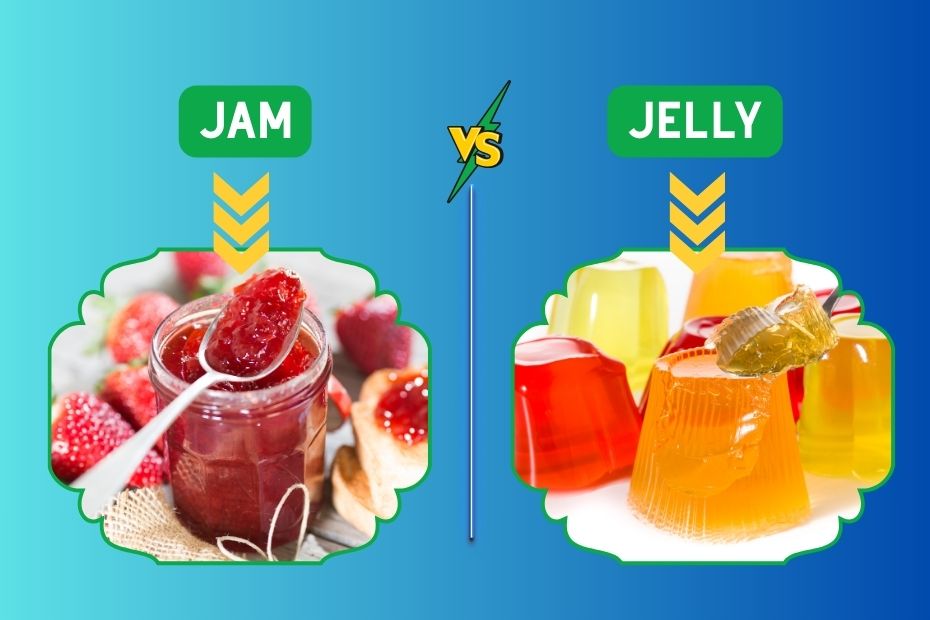
| Feature | Jam | Jelly |
|---|---|---|
| Main Ingredients | Crushed fruit, sugar, pectin | Fruit juice, sugar, pectin |
| Texture | Thick, spreadable, with fruit pieces | Smooth, firm, gelatinous |
| Fruit Content | Contains fruit pulp and pieces | Made only from fruit juice (no pulp) |
| Appearance | Cloudy, with visible fruit bits | Clear, translucent |
| Consistency | Thicker, less firm | Firm, holds its shape |
| Spreadability | Easily spreadable | More firm, may tear delicate breads |
What is Jam?
Jam is made by crushing fruit and cooking it with sugar. The fruit pulp and skin are included in the final product, giving jam a thicker, more textured consistency. Because it contains actual fruit pieces, jam tends to be more flavorful and has a spreadable but chunkier texture.
Key characteristics of jam:
- Contains crushed fruit or fruit pulp
- Thicker, more spreadable consistency
- Often has visible fruit pieces
- Cloudier appearance
- Generally more fruit-forward flavor
What is Jelly?
Jelly is made from fruit juice that has been strained to remove any solid pieces of fruit. The juice is then cooked with sugar and pectin to create a clear, gelatinous spread. Jelly has a smooth, uniform texture and is typically more translucent than jam.
Key characteristics of jelly:
- Made from strained fruit juice only
- Smooth, gelatinous consistency
- No fruit pieces or pulp
- Clear, translucent appearance
- Firm enough to hold its shape
Which One Should You Use?
The choice between jam and jelly often comes down to personal preference and intended use:
- For toast and sandwiches: Jelly’s smooth texture makes it popular for peanut butter and jelly sandwiches
- For baking: Jam is often preferred for thumbprint cookies and pastries
- For cheese boards: Both work well, but jam provides more texture
- For flavor intensity: Jam typically has a more intense fruit flavor
Nutritional Differences
While both jam and jelly contain similar amounts of sugar and calories, jam may retain slightly more vitamins and fiber from the fruit pulp. However, both are considered sweet spreads rather than health foods and should be consumed in moderation.