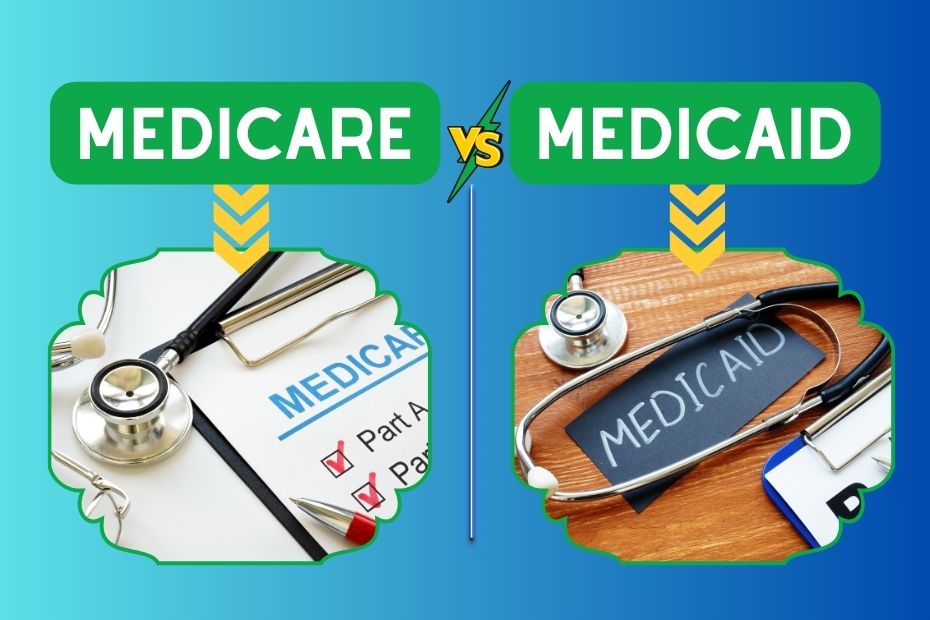
Understanding U.S. health programs can be confusing, especially when terms like Medicare and Medicaid are often mentioned together. While both provide health coverage, they serve different purposes and populations.
Medicare
Medicare is a federal health insurance program primarily for people aged 65 and older, but also for some younger individuals with disabilities or specific conditions like End-Stage Renal Disease.
Medicaid
Medicaid is a joint federal and state program that provides health coverage to low-income individuals and families, including children, pregnant women, elderly adults, and people with disabilities.
Key Differences Between Medicare and Medicaid
| Feature | Medicare | Medicaid |
|---|---|---|
| Purpose | Provides health insurance primarily for seniors and certain disabled individuals. | Provides health coverage for low-income individuals and families. |
| Eligibility | Age 65+, or younger with specific disabilities or conditions. | Based on income, family size, and state-specific rules. |
| Funding | Funded mainly by the federal government. | Jointly funded by federal and state governments. |
| Coverage | Includes hospital care (Part A), medical services (Part B), and prescription drugs (Part D). Additional coverage available through Medicare Advantage (Part C). | Covers a broad range of services, including doctor visits, hospital stays, long-term care, and sometimes prescription drugs. Coverage can vary by state. |
| Cost to Beneficiaries | Premiums, deductibles, and co-pays depending on plan. | Usually low or no cost, depending on income and state rules. |
Conclusion: While both programs aim to provide healthcare access, Medicare focuses on age and disability, whereas Medicaid focuses on income and need. Understanding these differences is essential for choosing the right coverage.